


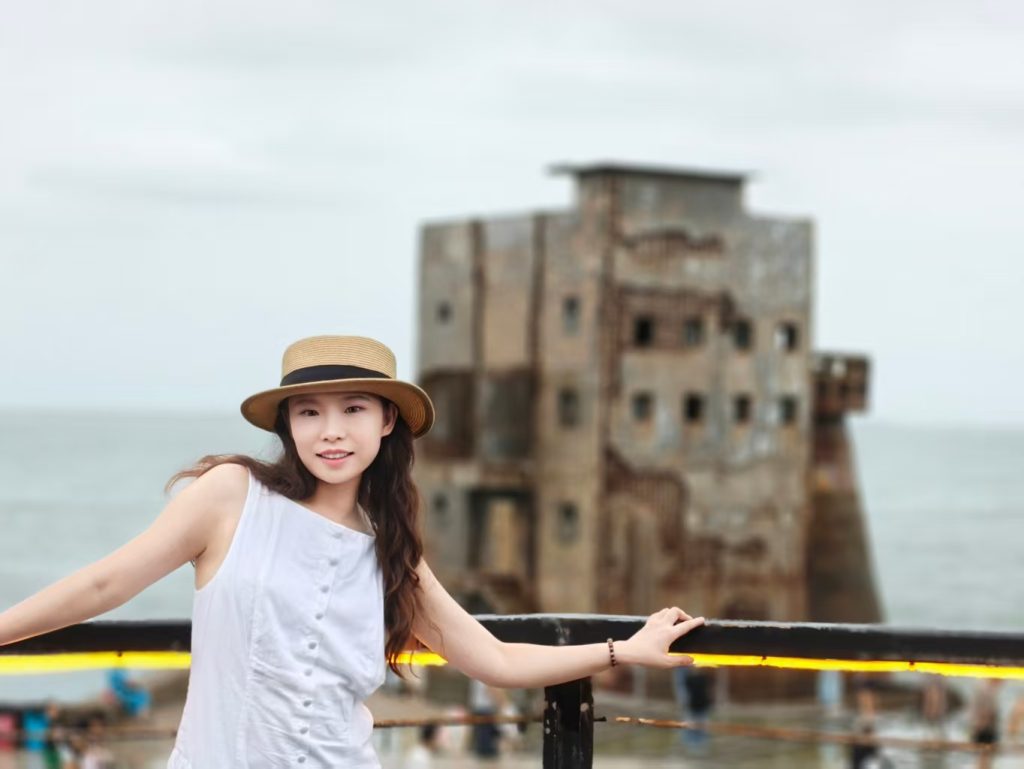
Miss Huang: Doctor of Comparative Literature
Me: Professor Huang, as a researcher in contemporary literature, could you comment on the current state of Chinese poetry?
Professor Huang: Contemporary Chinese poetry exhibits a dual landscape of “diverse fragmentation” and “technological reinvention.” On the creative front, mainstream literary circles (such as Poetry Magazine) uphold humanistic values, while grassroots movements thrive: migrant worker poet Xu Lizhi chronicles industrial alienation through blood-stained verse, while net-based poet “Ge Hua Ren” resonates with youth via three-line poems on Douyin. Classical verse has seen a revival through programmes like China Poetry Contest, yet original modern poetry faces dwindling readership. In dissemination, technology presents a double-edged sword: short-video platforms propel “fragmented poetry” (such as Xiaohongshu’s “Poem of the Day”) to viral popularity while eroding depth; AI poetry generators (like Jiuguo) spark debates over “creative agency”. Generationally, poets born in the 1950s (like Ouyang Jianghe) continue exploring linguistic philosophy, while those born in the 1990s excel at cross-disciplinary experimentation—poet Velvet Meteor embeds verse within video games, while Wang Jibing’s practice of writing poetry on takeaway order slips went viral. The core contradiction today lies in the disconnect between elite writing and popular reception. Yet innovative practices like poetry exhibitions in the underground and verse walls in urban villages seek to reconnect poetry with everyday life.
Me: How do you interpret poetry from a comparative literature perspective?
Professor Huang: The essence of comparative poetics lies in breaking cultural boundaries to reveal the universality of human emotion and the diversity of its expression. Thematic studies reveal cross-civilisational resonance: China’s Du Fu denouncing “wine and meat stinking in the red gates” parallels Blake’s London in exposing class oppression; Syrian poet Adonis’s “My solitude is a garden” echoes Li Shangyin’s “Each inch of longing turns to ash” in their shared alchemy of love’s anguish. Form comparison proves even more illuminating: classical Chinese poetry’s “juxtaposition of imagery” (e.g., Ma Zhiyuan’s “withered vines, ancient trees, dusk crows”) directly inspired Ezra Pound’s American Imagist manifesto; while Arabic poetry’s “hyperbole tradition” forms a parallel with Li Bai’s “white hair three thousand zhang long”. Translation studies reveal cultural incommensurability: the Chinese “moon” carries nostalgia (Li Bai’s “I lift my head to gaze at the bright moon”), requiring cultural annotation in English translation; conversely, the metre of English sonnets often transforms into creative compromises of parallelism and tonal patterns in Chinese renditions. Comparative analysis reveals poetry as both the cipher of national spirit and a bridge for civilisational dialogue—Nigerian poet Wole Soyinka’s rewriting of Greek tragedy through Yoruba mythology exemplifies the vitality of cross-cultural poetics.
Question: How does poetry engage with social practice?
Professor Huang: Poetry’s intervention in society hinges on moving from the study to the scene, transforming language into action:
1. Witness to Public Issues – Hong Kong poet Liao Weitang documented social movements in After the Downpour, where the line “Umbrellas bloomed like white chrysanthemums beneath iron branches” became a spiritual totem for protesters – Ecopoet Hua Hai initiated “Poetry Hikes” in nature reserves, using The Red Light on the Cliff to advance environmental legislation
2. Amplifier for marginalised communities – Beijing’s Pici Village “Migrant Workers’ Poetry Group” combats spiritual alienation through collective creation, with works featured in UNESCO’s “Archives of Migrant Literature” – Poet Lan Lan pioneered “poetry therapy” in Henan’s AIDS villages; villagers’ composition “Green Wheat Shoots, White Pills” catalysed societal attention on healthcare issues
3. Urban Space Transformers – Shanghai Metro’s “Poetry at Platforms” initiative (e.g., “Next Stop: Spring”) restores poetic moments for commuters – During Guangzhou’s urban village redevelopment, residents reworked demolition slogans into wall poems: “Bulldozers cannot uproot sunflowers blooming on windowsills” These practices demonstrate: when poetry embeds itself within society’s fabric, a single verse becomes a lever for change.
Me: Poetry’s Unique Value in Modern Society
Professor Huang: Poetry’s irreplaceability manifests through threefold redemption:
1. A “decelerator” against time’s tyranny. Amidst the torrent of fragmented information, Bei Dao’s one-word poem “Life”: “Web” compels readers to pause and contemplate—this linguistic conciseness fosters profound reflection unattainable through algorithmic feeds.
2. An antidote to atomised existence: Yu Xiuhua’s “Living like a peasant, fetching water and cooking daily” lends dignity to the solitude of the underprivileged; Mary Oliver’s “Wild Geese” declares, “Tell me your despair, and I will tell you mine,” forging an emotional community that transcends virtual connections.
3. Reconstructing the ‘Coordinate Instrument’ of the Meaningful Star Chart When modern humanity descends into value nihilism, Chen Xianfa’s 《丹青见》 restores the order of existence with lines like “朽木高于白松,杉树高于桤木…” Polish poet Wisława Szymborska declares more bluntly in Under a Small Star: “I apologise to chance for necessity.” The ultimate value lies in poetry’s use of metaphor to safeguard the complexity of the spirit. As the Syrian poet Adonis wrote amidst war: “The world has left me covered in wounds, yet from these wounds grow wings” — in the face of systematic oppression, poetry remains the final bastion of the soul’s freedom.

